

If you’re a mid-career professional, is it too late for you to make a change into humanitarian or development work? We’re asked this question a lot and always answer with a resounding ‘No!’; it’s absolutely not too late.
There’s no reason why you have to launch your aid or development career immediately out of high school or university. In fact, having another career first can give you the chance to develop strong transferrable skills that can be applied once you do find work with a non-profit, the United Nations, a foundation, development bank or more. You could also take the time to add valuable assets to your CV, like another language or volunteer experience.
Here are five key reasons why it’s not too late for mid-career professionals to transition into an international career in aid or sustainable development:
1. You can market your transferrable skills
These organizations value expertise just like all employers and, for many roles, that expertise can be gained in industries that have no connection to aid or development work. Yes, this is a highly competitive global market where your fellow applicants can be intimidatingly impressive. But, in the end, if you can prove that your expertise would be the best fit and offer the most value-add for the role, or that you bring a unique combination of skills and experience that stands out, you may well find yourself rising to the top of the pile.
It does take effort to tailor each job application and market your transferrable skills and competencies to match the job description. So make sure you leave time for that crucial step in the process.
2. There is a huge range of organisations and jobs
It’s a huge workforce with jobs needing to be filled in all corners of the globe. First, to talk some numbers: more than 125,000 people globally are on staff contracts or appointments of more than 12 months with the United Nations, and many more are on shorter consultancies. Further, there’s an estimated 42,000 active intergovernmental organisations (like the United Nations, World Bank or European Union) and international NGOs (such as Save the Children, Oxfam or Doctors Without Borders). And, according to some workforce data, nonprofits employ more than 7% of the global workforce.

Photo credit: UNFPA Bangladesh / Fahim Tajrin
3. The need for humanitarian and development workers is growing
With humanitarian needs remaining high, more conflict and violence, and climate change triggering more disasters, the world will need more aid and development workers than ever before. That means more people needed to work with community organisations, non-profits, the UN, development banks, foundations and more.
According to the UN Office for the Coordination of Humanitarian Affairs, nearly 300 million people around the world will need humanitarian assistance and protection in 2024 due to conflicts, emergencies and other causes. Further, more than 1 in 73 people have ben forcibly displaced: nearly double the ratio from a decade ago. This includes internal displacement caused by climate change which surged by 45 per cent in just one year, from 2021 to 2022.
4. Burnout leads others to take a break or leave
There is always turnover in this line of work. Not only do you often need to live and work in a country away from your friends and family, but the job can affect your mental health. You may observe or experience things that are traumatic or highly stressful and can trigger anxiety, depression or other conditions. You may live with temporary or longer-term threats to your personal safety and well-being. This can leave you feeling quite isolated when you return home and you may find it hard to connect with friends and family. Finally, aid workers often push through and keep working when they really need to take a break; their commitment to trying to help people who need it can override their own self-care.
This can all lead to burnout and cause some people to step away from the industry, either temporarily or permanently (see this Hit the Iron Bell article). Those who leave need to be replaced.
5. I did it
If you’re still not convinced that it’s not too late for mid-career professionals to change into humanitarian or development work, look at my story – I did exactly that! In my early 30s, I quit my job in politics in Australia to build my own career working for the United Nations and non-profits.

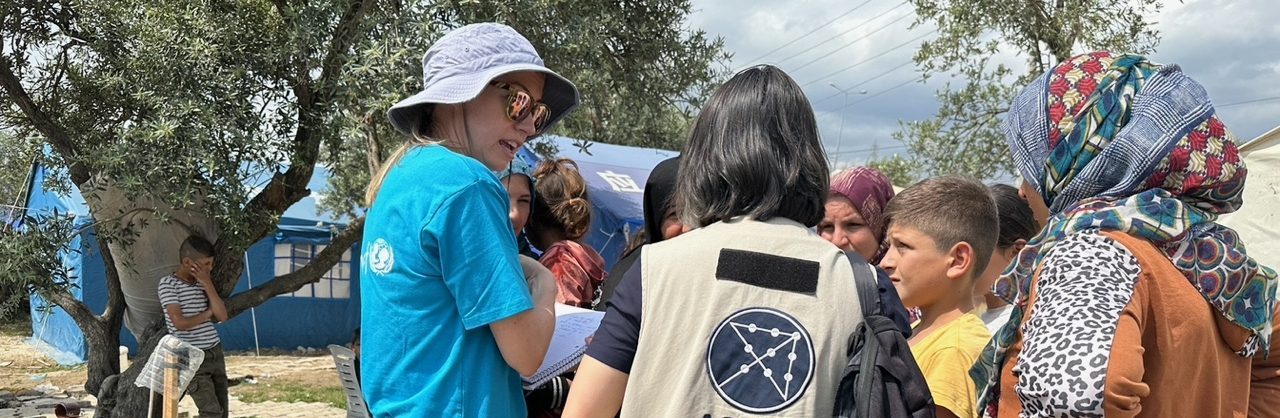
The author in Türkiye in April 2023, supporting the response to the devastating earthquakes.
Ultimately, you need to decide what timeline works best for you and your life path. But don’t rule yourself out before you even start, by telling yourself it’s too late to transition into aid or development work. There are pros and cons of joining a non-profit, foundation, development bank, the United Nations or similar organisations at the start of your career, versus mid-way through.
Whenever you decide the time is right, if you’re deliberate, persistent and flexible, you will eventually get your foot in the door.